

Germany is a global hub for doctoral research, offering high-level academic quality. If you are a researcher and eager to complete your PhD as well as searching for the Best Universities in Germany for PhD, then this post is for you.
Whether you want to study in English or looking for a fully funded seat, Germany offers some of the best facilities in the world.
In this article, we will guide you through the top 20 best universities in Germany for PhD, the application process, and how you can manage your expenses.
Best Universities in Germany for PhD: A Brief Outline
Germany has a unique dual system for PhDs. You can either choose a structured PhD program (like in the USA) or an individual doctorate where you work directly with a professor. Most importantly, the PhD programs in Germany for international students are highly respected because they focus on practical research.
Key Benefits for Students:
- Low Tuition Fees: Most PhD in German public universities have no tuition fees.
- English Language: There are many PhD programs in Germany in English, so you don’t need to be an expert in German to start.
- World-Class Labs: Access to high-tech equipment and libraries.
- Work Opportunities: You can work while you research to cover your daily costs.
Top 20 Best Universities in Germany for PhD (2026 Rankings)
Here is the list of the top 20 best universities in Germany for PhD based on the latest 2026 global rankings (QS and THE). These universities are famous for their research output and facilities for foreign students. These are:
1. Technical University of Munich (TUM)
- Standard: Ranked #1 in Germany. Known as a “University of Excellence.”
- Facilities: Home to the TUM Graduate School, which provides proofreading services, travel grants, and “onboarding” for international students.
- Best For: Engineering, Computer Science, and Natural Sciences.
- Website: tum.de
2. Ludwig Maximilian University of Munich (LMU)
- Standard: A leader in humanities and basic sciences.
- Facilities: Access to the GraduateCenterLMU, which offers workshops on “soft skills” like public speaking and scientific writing. It has strong ties to the Max Planck Institutes.
- Best For: Medicine, Physics, and Social Sciences.
- Website: lmu.de
3. Heidelberg University
- Standard: Germany’s oldest university with a global reputation for research.
- Facilities: The Graduate Academy provides a central “heiDOCS” portal to track your research progress. It has world-class labs for biosciences.
- Best For: Medicine, Life Sciences, and Law.
- Website: uni-heidelberg.de
4. RWTH Aachen University
- Standard: The “powerhouse” of German engineering.
- Facilities: Massive industry partnerships (like with Siemens and Bosch). PhD students often work as “Research Associates” with full salaries.
- Best For: Mechanical Engineering, Materials Science, and AI.
- Website: rwth-aachen.de
5. Humboldt University of Berlin (HU Berlin)
- Standard: Famous for the “Humboldtian model” of uniting research and teaching.
- Facilities: The Humboldt Graduate School acts as an umbrella for over 20 structured programs, providing conflict mediation and career coaching.
- Best For: Philosophy, History, and Economics.
- Website: hu-berlin.de
6. Free University of Berlin (FU Berlin)
- Standard: Highly international; over 30% of PhD students are from outside Germany.
- Facilities: Dahlem Research School offers specialized training for international researchers and support for women in science.
- Best For: Political Science, International Relations, and Humanities.
- Websit: fu-berlin.de
7. Karlsruhe Institute of Technology (KIT)
- Standard: A unique merger of a university and a national research center.
- Facilities: Access to large-scale national research infrastructure. The Karlsruhe House of Young Scientists (KHYS) manages funding and networking.
- Best For: Energy Research, Climate Science, and Informatics.
- Website: kit.edu
8. Technical University of Berlin (TU Berlin)
- Standard: Central location in Germany’s startup capital.
- Facilities: Focus on “Transfer of Technology.” PhD candidates get help with patents and starting their own “Spin-off” companies.
- Best For: Architecture, Urban Planning, and Mathematics.
- Website: tu.berlin
9. University of Bonn
- Standard: Global leader in Mathematics (home to many Nobel and Fields Medal winners).
- Facilities: The Bonn Graduate Center offers interdisciplinary grants. It is very close to UN organizations, great for policy research.
- Best For: Mathematics, Economics, and Agriculture.
- Website: uni-bonn.de
10. University of Göttingen
- Standard: Historical “City of Science” with 45 Nobel Prize winners connected to it.
- Facilities: Part of the Göttingen Campus, a network involving Max Planck and German Aerospace Center (DLR) institutes.
- Best For: Physics, Biology, and Agricultural Sciences.
- Website: uni-goettingen.de
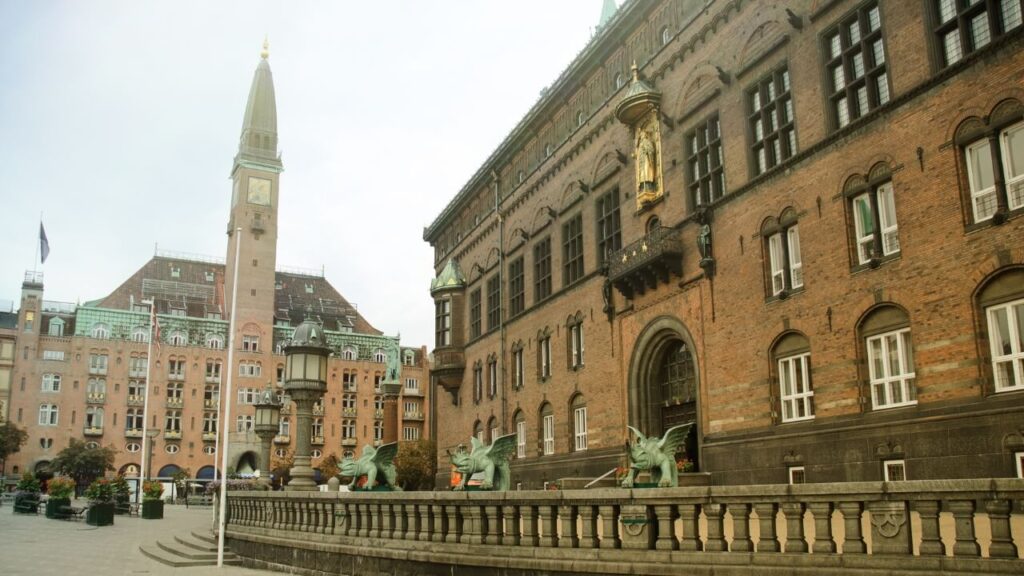
11. University of Freiburg
- Standard: Famous for its sustainability research and green campus.
- Facilities: The International Graduate Academy (IGA) helps with housing and visa issues specifically for PhDs.
- Best For: Environmental Studies, Microsystems Engineering, and Forestry.
- Website: uni-freiburg.de
12. University of Hamburg
- Standard: Northern Germany’s largest research hub.
- Facilities: Strong focus on “Climate, Earth, Environment” (CLICCS). Offers a dedicated “Welcome Service” for international researchers.
- Best For: Climate Research, Marine Biology, and Media Studies.
- Website: uni-hamburg.de
13. University of Tübingen
- Standard: Top-tier for Artificial Intelligence and Neurosciences.
- Facilities: Home to the “Cyber Valley,” Europe’s largest AI research consortium.
- Best For: Machine Learning, Theology, and Medicine.
- Website: uni-tuebingen.de
14. TU Dresden
- Standard: Leading university in the “Silicon Saxony” region.
- Facilities: Excellent labs for microelectronics. The Graduate Academy provides travel and completion grants for final-year students.
- Best For: Nano-technology, Physics, and Engineering.
- Website: tu-dresden.de
15. University of Cologne
- Standard: Known for its high-impact research in aging and genetics.
- Facilities: The Albertus Magnus Graduate Center (AMGC) is a central service point for all doctoral students.
- Best For: Biology (Aging), Management, and Social Sciences.
- Website: uni-koeln.de
16. FAU Erlangen-Nuremberg
- Standard: Most innovative university in Germany (Reuters ranking).
- Facilities: Close collaboration with Fraunhofer Institutes and Siemens Healthineers.
- Best For: Medical Technology, Chemical Engineering, and Energy.
- Website: fau.de
17. University of Münster
- Standard: A strong focus on “Religion and Politics” and Chemistry.
- Facilities: The WWU Graduate Centre supports interdisciplinary networking across its 15 faculties.
- Best For: Chemistry, Law, and Theology.
- Website: uni-muenster.de
18. University of Stuttgart
- Standard: Located in the heart of Germany’s car industry.
- Facilities: World-class wind tunnels and simulation technology (High-Performance Computing Center).
- Best For: Automotive Engineering, Aerospace, and Manufacturing.
- Website: uni-stuttgart.de
19. Goethe University Frankfurt
- Standard: Strong focus on Finance and Social Research.
- Facilities: The GRADE (Goethe Graduate Academy) offers over 100 courses per year for PhD professional development.
- Best For: Finance, Sociology (Frankfurt School), and Pharmacy.
- Website: uni-frankfurt.de/en
20. University of Kiel
- Standard: Germany’s expert in ocean and coastal research.
- Facilities: Home to GEOMAR, a world-leading institute for oceanography.
- Best For: Marine Sciences, Geosciences, and Medicine.
- Website: uni-kiel.de
Comparison Table: University Standards (Summary)
| University | Global Rank (2026) | Primary PhD Standard | Key PhD Facility |
|---|---|---|---|
| TUM | #22 | Tech Excellence | TUM Graduate School |
| LMU | #34 | Comprehensive Science | GraduateCenterLMU |
| Heidelberg | #49 | Classic Research | Graduate Academy |
| RWTH | #92 | Heavy Engineering | Center for Young Academics |
| HU Berlin | #89 | Humanities Lead | Humboldt Graduate School |
Fully Funded PhD in Germany for International Students
If you are worried about money, you should look for a fully funded PhD in Germany for international students. In Germany, PhD students are often treated as ‘employees’ rather than just students. Know details about work facilities below:
How Funding Works:
- Research Assistantships: You work at the university and get a salary (TV-L E13 scale). This typically pays between €1,200 to €2,500 per month after tax.
- External Scholarships: Many organizations offer PhD programs in Germany with scholarship benefits.
- Industrial PhDs: Large companies like BMW or Siemens pay you to do research that helps their business.
Country Comparison: Germany vs UK vs USA vs Australia (2026)
Choosing the right country is a big decision. The table shows how Germany compares to other popular destinations for a PhD.
| Feature | Germany | United Kingdom (UK) | USA | Australia |
|---|---|---|---|---|
| Tuition Fees | €0 (Public) | £18,000 – £35,000 | $25,000 – $60,000 | AU$ 30,000 – 45,000 |
| PhD Duration | 3 – 5 Years | 3 – 4 Years | 4 – 6 Years | 3 – 4 Years |
| Funding | Very High (Salaries) | Competitive (Stipends) | High (Teaching Asst.) | High (Scholarships) |
| Living Cost/Mo | €992 – €1,200 | £1,200 – £1,800 | $1,500 – $3,000 | AU$ 2,000 – 2,600 |
| Language | English/German | English | English | English |
Why Germany is Best: For PhD students, Germany is the clear winner for ‘Value for Money.’ You get a world-class degree with zero tuition fees and a high chance of getting a monthly salary.
Best Universities in Germany for PhD: Tuition Fees and Living Costs 2026
While public universities are mostly free, you still need to pay a ‘Semester Contribution’ and cover your personal life.
| Expense Item | Estimated Monthly Cost | Annual Total (Approx.) |
|---|---|---|
| Tuition Fees | €0 (Public Uni) | €0 |
| Semester Fee | €20 – €70 | €250 – €450 (Total/Year) |
| Rent (Shared Room) | €450 – €650 | €5,400 – €7,800 |
| Food & Groceries | €200 – €250 | €2,400 – €3,000 |
| Health Insurance | €120 – €160 | €1,440 – €1,920 |
| Internet & Mobile | €30 – €50 | €360 – €600 |
| Total Living Cost | €992 – €1,200 | €11,904 – €14,400 |
How to Apply for PhD in Germany: Step-by-Step
Knowing how to apply for a PhD in Germany is key to your success. The process is a bit different than a Master’s degree.
- Find a Supervisor (Doktorvater): For an individual PhD, you must email a professor with your research proposal and ask them to accept you.
- Check Requirements: Ensure your Master’s degree is recognized in Germany.
- Language Test: For PhD programs in Germany in English, you usually need an IELTS score of 6.5 or 7.0.
- Apply for Admission: Once a professor agrees, you apply to the university’s international office.
- Visa Application: Start your visa process as soon as you get the acceptance letter.
Best Universities in Germany for PHD: Student Visa Information
Getting a German student visa is a structured process. For students from South Asia (India, Bangladesh, Pakistan), here are the details:
- Visa Success Rate: Very high (around 90-95%) if your documents are complete.
- Processing Time: Usually 4 to 8 weeks.
- Visa Fees: Roughly €75 (payable in local currency).
- IELTS Requirement: Usually 6.5 for English-taught PhDs.
- Bank Balance (Blocked Account): You must show €11,904 for one year.
- Work Permit: You can work 140 full days or 280 half days per year.
- Spouse Visa: Yes, PhD students can bring their spouse. The spouse can usually work full-time.
- Age Limit: There is no official age limit for a PhD visa in Germany.
Document Checklist for Visa:
- Valid Passport
- Acceptance letter from the university
- Proof of funding (Scholarship letter or Blocked Account)
- Master’s Degree and Transcripts (APS Certificate is mandatory for Indian students)
- Health Insurance
- Motivation Letter (SOP)

Useful Scholarship and Grant Websites
If you are looking for PhD programs in germany with scholarship, check these official sites:
- DAAD Scholarship Database: daad.de/stipdb
- Research in Germany: research-in-germany.org
- Stipendium Plus: stipendiumplus.de
- Alexander von Humboldt Foundation: humboldt-foundation.de
Best Universities in Germany for PhD: FAQs
Are there any tuition-free universities for PhD in Germany?
Yes, almost all phd in germany public university options are tuition-free for both local and international students. You only pay a small semester fee.
Can I do a PhD in Germany without knowing German?
Yes, there are many phd programs in germany in english. Most scientific and technical research is done entirely in English.
What is the minimum bank balance for a German PhD visa in 2026?
As of 2026, you need to show €11,904 in a blocked account unless you have a scholarship or a work contract from the university.
How long does it take to complete a PhD in Germany?
A typical PhD takes 3 to 5 years, depending on your subject and research progress.
Overall Insights
Germany is truly a paradise for doctoral researchers. With the Best Universities in Germany for PhD offering high-quality education for free, there is no better place to start your academic career in 2026. From the bustling labs of Munich to the historic libraries of Heidelberg, your future is bright. Start preparing your research proposal today and take the first step toward your “Dr.” title!
Sources of Information:
- DAAD (German Academic Exchange Service) – PhD Database 2026
- Federal Foreign Office Germany – Visa Regulations 2026
- QS World University Rankings 2026 – German Institutions
- Times Higher Education (THE) – World University Rankings 2026
 Follow us on Google News for latest Scholarships!