
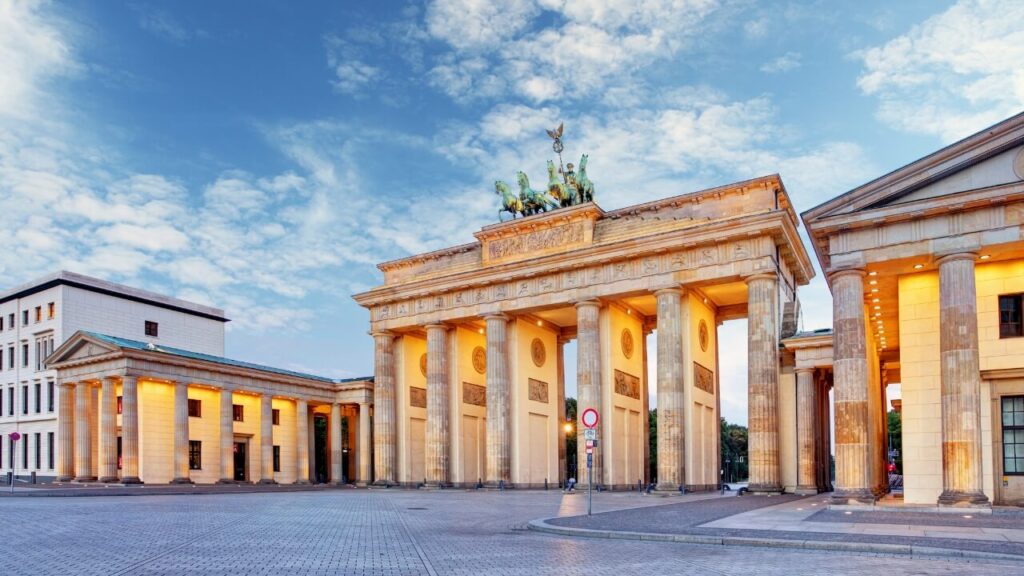
The Germany Student Visa Backlog has become a major hurdle for many international students aspiring to study in Germany. With long waiting times and uncertainty, many students are struggling to secure their visas on time.
The German embassy in Bangladesh recently announced that they can process only 2,000 student visas per year, while 80,000 students are still waiting. This has left many Bangladeshi students wondering about their future. Students are already waiting more than two years to have their study visa interview for Germany
However, this is not the end of the road. There are multiple alternative pathways to Germany and other European countries.
Germany Student Visa Backlog: What are the Alternative Pathways?
If you’re facing delays, don’t worry— there are alternative pathways that can help you achieve your dream of studying and working in Germany. In this guide, we’ll explore practical solutions such as Ausbildung, FSJ, BFD, PhD programs, job visas, the Opportunity Card, and even options in other European countries. Keep reading to find the best alternative that suits your goals!
In this blog, we will discuss other options that could be potential solutions.
1. Ausbildung (Vocational Training)
Germany’s Ausbildung program allows students to train in a skilled profession while earning a stipend. This is an excellent option for those looking to enter the German job market without a university degree.
Benefits:
✔ No tuition fees
✔ Earn €800–€1,400 per month
✔ High demand in fields like IT, healthcare, logistics, and engineering
✔ Direct job opportunities after completion
Requirements:
- A2/B1 level German proficiency
- A high school diploma (HSC equivalent)
- A contract with a German company offering Ausbildung
🔗 Where to find:
2. FSJ & BFD: Voluntary Service Programs
Germany offers Freiwilliges Soziales Jahr (FSJ) and Bundesfreiwilligendienst (BFD) for people who want to work in social sectors like hospitals, care homes, and schools.
Key Features:
✔ Open to individuals aged 18–27 years (FSJ) and above 27 years (BFD)
✔ Work in healthcare, education, and NGOs
✔ Receive a monthly stipend of €300–€600
✔ Possible visa pathway for long-term stay
Where to Apply:
3. PhD Programs with Scholarships
For students with a master’s degree, PhD programs in Germany are a great way to enter the country. Many universities offer tuition-free education and scholarships.
Advantages:
✔ No tuition fees
✔ Monthly funding from DAAD, DFG, or Erasmus
✔ Work opportunities during studies
✔ Pathway to permanent residency
🔗 Where to Apply:
4. Direct Job Opportunities in Germany
If you already have work experience or qualifications, Germany’s labor market is open for skilled workers. Many sectors urgently need professionals, and companies can sponsor work visas.

High-Demand Sectors:
✔ IT & Software Development (JavaScript, PHP, Java, Python, Cybersecurity)
✔ Engineering (Mechanical, Electrical, Civil)
✔ Healthcare (Doctors, Nurses, Caregivers)
✔ Hospitality & Logistics
Requirements:
- A recognized degree or diploma
- B1/B2 German language for healthcare jobs
- A job contract from a German employer
🔗 Where to Find Jobs:
5. Opportunity Card (Chancenkarte)
Germany’s Opportunity Card is a points-based visa that allows you to stay for 1 year and find a job.
Eligibility:
✔ Degree or diploma recognized in Germany
✔ At least 6 points based on education, experience, language, and age
✔ Proof of funds (~€1,091 per month)
🔗 More Info:
6. Au Pair Program: A Cultural Exchange Pathway
If you’re between 18 and 26 years old, the Au Pair program allows you to stay in Germany with a host family, learn the language, and experience the culture.
Benefits:
✔ Free food, accommodation, and health insurance
✔ Monthly pocket money (~€280–€450)
✔ Opportunity to learn German (A1–B1 required)
✔ Visa can be extended for further studies or Ausbildung
Requirements:
- Basic German (A1 level)
- Age 18–26 years
- Host family agreement
🔗 Where to Apply:
7. Study in Other European Countries
If Germany’s student visa process is too slow, consider these other European countries with easier admission and work opportunities.
| Country | Tuition Fees | Work Hours | Post-Study Work Visa |
|---|---|---|---|
| Austria | €1,500/year | 20 hours/week | 1-2 years |
| Netherlands | €8,000–€15,000/year | 16 hours/week | 1 year |
| Finland | €5,000–€15,000/year | 25 hours/week | 1 year |
| Sweden | €8,000–€20,000/year | 20 hours/week | 1 year |
| Denmark | Free for EU students, €6,000–€16,000/year | 20 hours/week | 1 year |
| Norway | Mostly free | 20 hours/week | 1 year |
| Poland | €2,000–€5,000/year | 20 hours/week | 9 months |
| Hungary | €1,500–€8,000/year | 20 hours/week | 9 months |
| Czech Republic | €3,000–€12,000/year | 20 hours/week | 9 months |
| Portugal | €3,000–€7,500/year | 20 hours/week | 1 year |
| Italy | €1,000–€5,000/year | 20 hours/week | 1 year |
| France | €2,770–€3,770/year | 20 hours/week | 2 years |
| Spain | €1,000–€6,000/year | 20 hours/week | 1 year |
| Lithuania | €2,000–€6,000/year | 20 hours/week | 1 year |
These countries offer high-quality education, affordable tuition, and easier visa processes compared to Germany. Many of them also have shorter waiting times and better post-study work options.
Would you like me to add any specific details about a particular country?
Final Thoughts
The long student visa wait time is frustrating, but there are many other ways to move to Germany or Europe. Whether through Ausbildung, FSJ, PhD, direct job offers, the Opportunity Card, or even Au Pair, you have multiple options.
If you need more guidance, feel free to comment below. Which option do you find most interesting? Let us know!
 Follow us on Google News for latest Scholarships!
spause visa er jonno appoinment neoa o ki off kory dise germany