

Are you looking for a stable and high-paying career in the healthcare sector? Many students from the USA, Europe, Asia, and across the globe are now asking how to become a sonographer to secure a bright future.
This profession is not just about taking pictures of babies in the womb; it is a highly technical field that saves lives every day.
In this detailed guide on degreeola.com, we will walk you through the education requirements, certification steps and the global salary outlook for 2026.
How to Become a Sonographer: An Overview
Undoubtedly, the medical field offers some of the most reliable job opportunities in the modern world. If you want to help patients without becoming a full-scale surgeon or doctor, learning how to become a sonographer is a fantastic choice.
Basically, a sonographer uses special equipment to look inside the human body. As a matter of fact, the demand for these professionals is growing rapidly in the USA, UK, Australia, and even in Asian countries like India and Bangladesh.
Certainly, a diagnostic medical sonographer salary is quite attractive, making it a ‘hot’ career opportunity right now. Therefore, if you are a student or a professional looking to switch careers, stay with us as we explain the academic/education requirements to become a sonographer in a very easy and simple way.
What is Sonography and Who is a Sonographer?
Actually, before you jump into the training, you must understand the basics of the job.
What is Sonography?
In simple words, sonography is a medical imaging technique that uses high-frequency sound waves to create images of the inside of the body. Unlike X-rays, there is no radiation involved. Consequently, it is safe for pregnant people and for checking soft tissues, blood flow, and organs.
Who is a Sonographer?
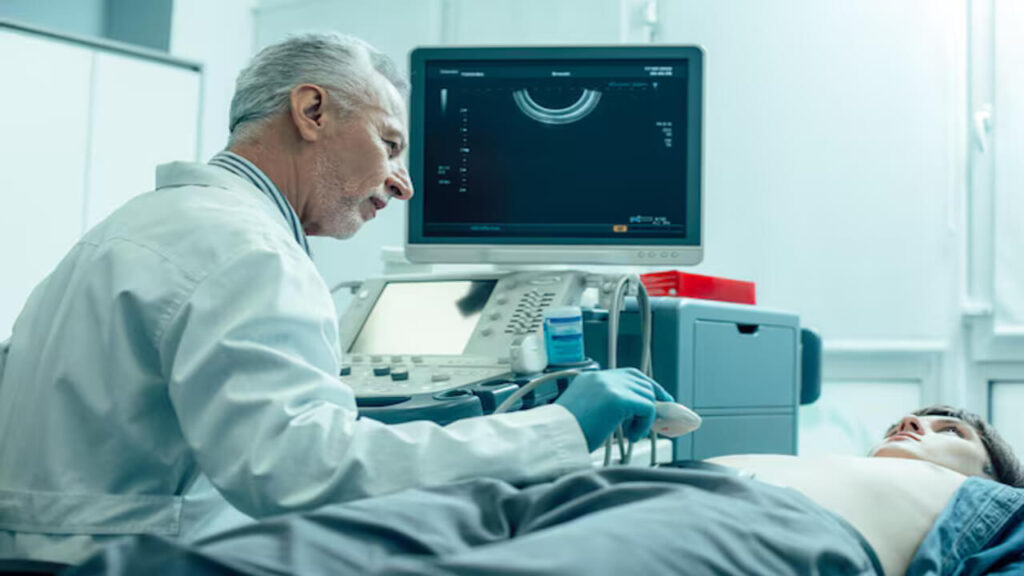
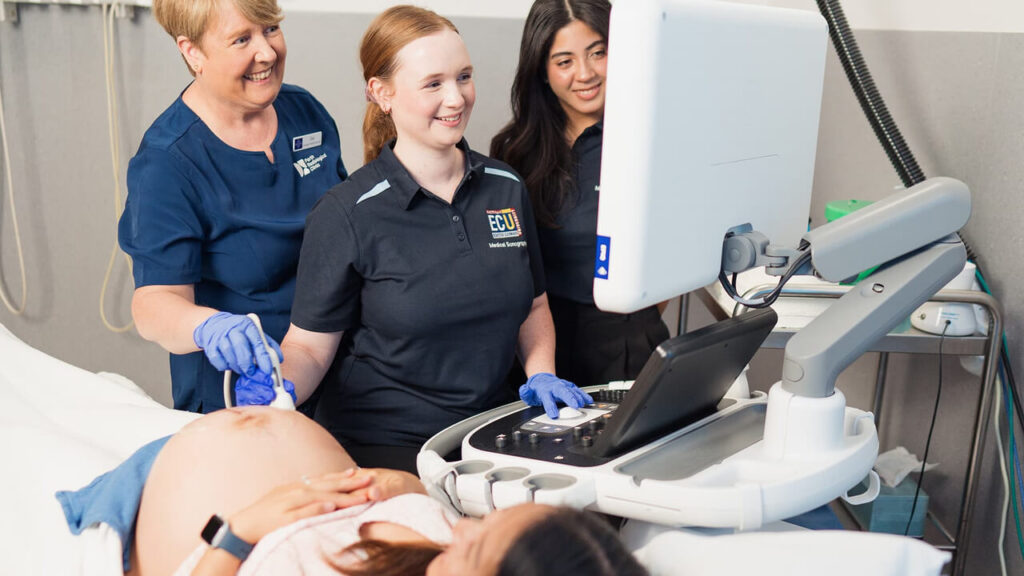
A sonographer, also known as an Ultrasound Technologist, is a highly skilled medical professional. They are the ‘eyes’ of the doctor. While the doctor interprets the final result, the sonographer is the one who operates the machine and finds the problem inside the body.
What Does a Diagnostic Medical Sonographer Do?
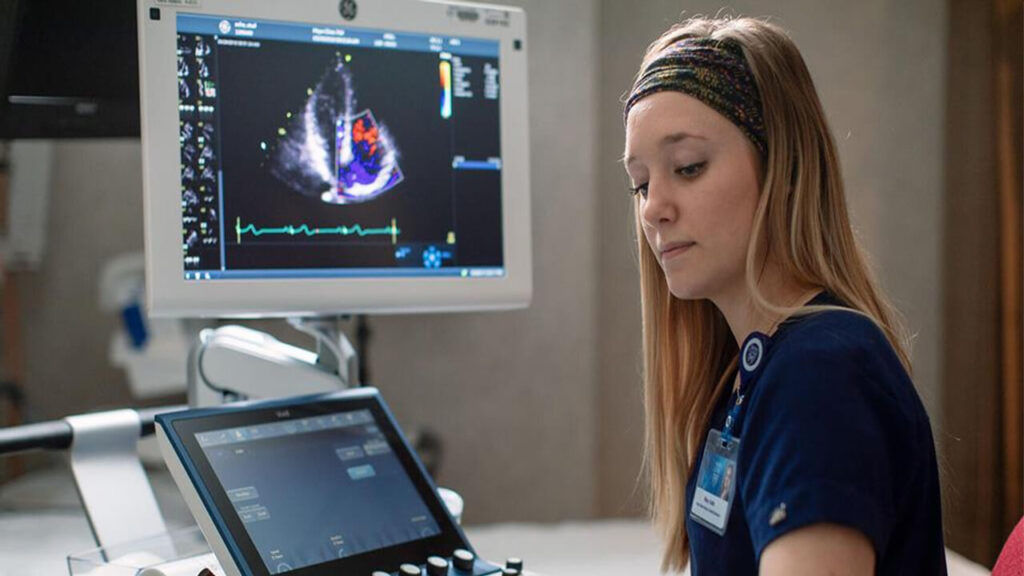
You might wonder what a typical day looks like for these experts. What does a diagnostic medical sonographer do? Their duties include:
- Preparing Patients: Explaining the procedure and making them comfortable.
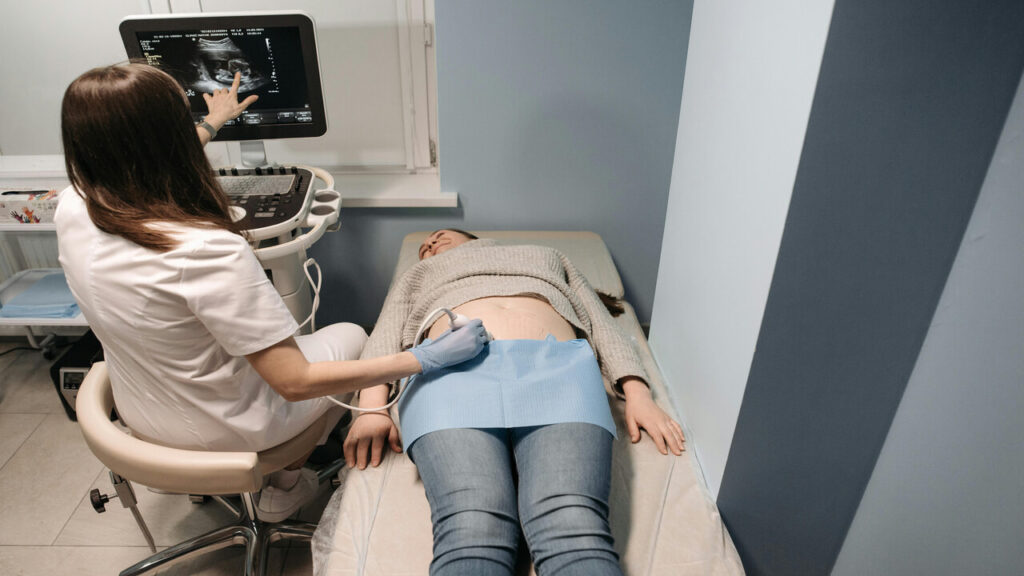
- Operating Equipment: Using the ultrasound transducer to capture clear images.
- Analyzing Images: Checking for abnormalities like tumors, cysts, or heart issues.
- Collaborating: Working closely with radiologists and physicians to provide accurate data for diagnosis.
- Maintenance: Keeping the expensive ultrasound machines in perfect working condition.
Why Will You Become a Sonographer?
There are many reasons why this is a top-tier career choice in recent days:
- Short Study Time: You can start working in just 2 years with an Associate Degree.
- High Salary: Even entry-level positions offer a very respectable salary.
- Job Satisfaction: You play a direct role in saving lives and helping mothers see their children for the first time.
- Flexibility: You can work in hospitals, private clinics, or even mobile imaging centers.
Academic/Education Requirements to Become a Sonographer
To be successful, you must follow a structured educational course. Generally, the academic/education requirements to become a sonographer include:
- High School Diploma: You must have a strong background in Science (Biology, Physics, and Math).
- Degree Programs: Most students choose a 2-year Associate Degree or a 4-year Bachelor’s Degree in Diagnostic Medical Sonography.
- Certificate Programs: If you already have a degree in another medical field (like Nursing), you can take a 1-year certificate course.
What to Look for in a Sonography Program?
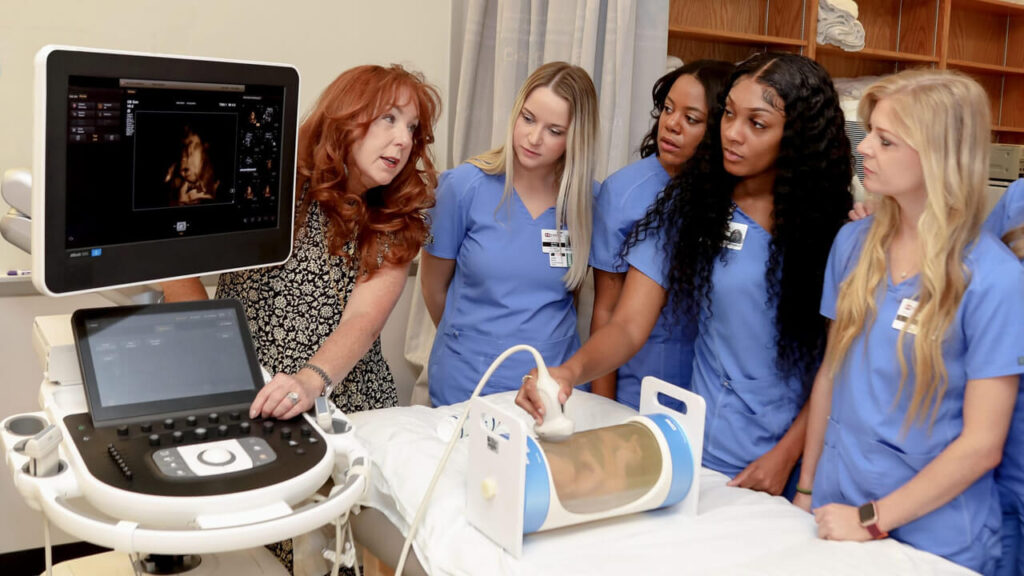
When choosing a college, always check for accreditation. In the USA, look for CAAHEP-accredited programs. In other countries, make sure the local health board recognizes the institution. A program with a lot of ‘Clinical Internship’ hours is always better because you need hands-on practice.
How to Become a Sonographer: Global Pathways
The rules change depending on where you live. Here is how to navigate the process in different regions:
1. How to Become a Sonographer in USA
In the United States, most people complete a CAAHEP-accredited Associate degree. After graduation, you must pass the ARDMS (American Registry for Diagnostic Medical Sonography) exam. This is the gold standard for how to get sonography certified.
2. How to Become a Sonographer in Australia
In Australia, you usually need a Bachelor’s degree in Medical Radiation Science or a similar field, followed by a Graduate Diploma in Medical Sonography. You must also be registered with the Australian Sonographer Accreditation Registry (ASAR).
3. How to Become a Sonographer in UK
In the UK, sonography is often a postgraduate specialization. This means you usually start as a Radiographer or Nurse and then do a Master’s or a PG Diploma. However, sonographer apprenticeship programs are becoming more common, allowing you to ‘earn while you learn.’
4. How to Become a Sonographer in Canada
You need to graduate from an accredited program and then pass the Sonography Canada national certification exam. The process is very similar to the USA.
5. How to Become a Sonographer in Germany & Europe
In Germany, sonography is often performed by doctors (Physicians). However, “Sonographers” (medical assistants with specialized training) are slowly becoming a separate role. You usually need a background in medical assistance and specific certificates from the DEGUM (German Society for Ultrasound in Medicine).
6. How to Become a Sonographer in Bangladesh and India
In India and Bangladesh, you can do a B.Sc. in Medical Imaging Technology or a Diploma in Ultrasound Technology. In view of the high population, there is a massive demand for ultrasound technicians in private diagnostic centers.
Where to Apply: Finding the Right Institution
Actually, the ‘where’ depends on which country you want to study in. You cannot just apply to any college; it must be a recognized and accredited institution.
1. In the USA (The CAAHEP Portal)
In the United States, you should only apply to programs accredited by the CAAHEP (Commission on Accreditation of Allied Health Education Programs).
- Where to find them: Visit the CAAHEP Website and use their “Find an Accredited Program” tool.
- Top Schools: Mayo Clinic College of Medicine, University of Iowa and many community colleges like Hillsborough Community College.
2. In the UK (UCAS and NHS)
In the UK, sonography is mostly a postgraduate course.
- Where to apply: Use the UCAS (Universities and Colleges Admissions Service) portal for undergraduate radiography degrees.
- NHS Jobs: If you are looking for a sonographer apprenticeship, you should check the NHS Jobs website daily.
3. In Australia (ASAR & Universities)
You must apply to universities that are approved by the ASAR (Australian Sonographer Accreditation Registry).
- Top Schools: Monash University, University of South Australia and Queensland University of Technology (QUT).
4. In India and Bangladesh
In these countries, you apply directly to medical colleges or specialized paramedical institutes.
- India: AIIMS, Christian Medical College (Vellore), and various state-run medical universities.
- Bangladesh: Bangladesh Institute of Health Sciences (BIHS) and various private diagnostic training centers approved by the govt. Medical Faculty.
How to Apply: A Step-by-Step 2026 Checklist
Undoubtedly, the application process can be stressful. Follow these steps to ensure you don’t miss anything:
Step 1: Complete Prerequisites
Before applying to a sonography major, most colleges require you to finish “Pre-med” subjects. As a matter of fact, you usually need to pass:
- Anatomy and Physiology
- Medical Terminology
- College-level Physics and Algebra
Step 2: Get Your Documents Ready
You will need a solid “Document Checklist.” This usually includes:
- High School/University Transcripts: (Must be 100% accurate and often translated into English).
- Proof of Language Proficiency: (IELTS score of 6.5 or TOEFL for international students).
- Letters of Recommendation: From science teachers or medical professionals.
- Personal Statement: Explaining why you will become a sonographer.
Step 3: Shadowing Hours
Many top-tier programs will not even look at your application unless you have “Shadowing Hours.” This means you must spend 10–40 hours observing a real sonographer in a hospital. Therefore, contact your local clinic early!
Step 4: The Interview
Because sonography requires good “bedside manner” (talking to patients), most schools will invite you for an interview. They want to see if you are patient, kind, and have a steady hand.
Application Fees and Deadlines (2026 Estimates)
| Country | Application Fee | Typical Deadline |
|---|---|---|
| USA | $50 – $150 | January – April (for Fall start) |
| UK | £28.50 (via UCAS) | January (for September start) |
| Australia | $50 – $100 AUD | September – December |
| India/BD | ₹500 – ₹2000 | Varies by state |
Key Strategies for International Students
If you are applying from India or Bangladesh to a foreign country, keep these Degreeola Tips in mind:
- Check for International Seats: Some programs have a very small quota for foreign students.
- Verify your Visa Eligibility: Ensure the school provides an I-20 (USA) or CAS (UK) document so you can get your student visa.
- Financial Proof: In view of the high tuition costs, you must show you have the funds (approx. $30,000–$50,000) before you apply.
Salary Comparison 2026 (Annual Estimates)
| Country | Average Yearly Salary (USD) | Local Currency Equivalent |
|---|---|---|
| USA | $85,000 – $110,000 | ₹70L – ₹91L |
| Australia | $90,000 – $125,000 | AUD 135k – 185k |
| UK | $55,000 – $75,000 | £43k – £58k |
| Canada | $75,000 – $95,000 | CAD 100k – 128k |
| India | $8,000 – $15,000 | ₹6L – ₹12L |
| Bangladesh | $6,000 – $12,000 | 7L – 14L BDT |
Note: Salaries in the USA and Australia are significantly higher due to the high cost of living and advanced healthcare systems.
Visa and Work Opportunities for International Students
If you study abroad, you need to know about the visa facilities:
- USA: You can stay for 1–3 years on OPT (Optional Practical Training) after your degree.
- UK: The “Graduate Route” visa allows you to stay and work for 2 years after completing your course.
- Australia: Post-study work visas can range from 2 to 4 years depending on the region.
- Scholarship Facility: Look for the Fulbright (USA), Chevening (UK), or DAAD (Germany) for general medical studies, though specific sonography scholarships are often provided by the individual universities.
How to Become a Sonographer: Limitations and Challenges
While the job is great, it is not without hurdles:
- Physical Strain: You have to stand for long hours and use your arm in repetitive motions, which can lead to shoulder or wrist pain.
- Emotional Stress: Sometimes you are the first to see that a baby has no heartbeat or a patient has advanced cancer.
- Technology Changes: You must keep learning as new AI-powered machines come out every year.
- Certification Rigor: Passing exams like the ARDMS is very difficult and requires months of hard study.
How to Get Sonography Certified?
Once you finish your school, you are not a sonographer yet. You need a license!
- Apply for Exam: Register with bodies like ARDMS (Global), Sonography Canada, or ASAR (Australia).
- Choose a Specialty: You can be certified in Abdomen, OB/GYN, Breast, or Vascular sonography.
- Pass the SPI: In the USA, you must first pass the Sonography Principles and Instrumentation (SPI) exam, which focuses on physics.
- Maintain Credits: Every year, you must take Continuing Education classes to keep your license active.
How to Become a Sonographer: FAQs
How many years does it take to become a sonographer?
Usually, it takes 2 years for an Associate degree and 4 years for a Bachelor’s degree. If you already have a medical degree, a certificate takes 1 year.
Is sonography a hard career?
It is physically demanding and academically challenging, but for those who love medical science, it is a very rewarding and stable job.
Can I become a sonographer without a degree?
In 2026, it is almost impossible. Most employers and certification boards require at least an Associate degree from an accredited institution.
What is the difference between an ultrasound and sonography?
Actually, “ultrasound” is the technology or the sound waves used, while “sonography” is the name of the medical practice. They are often used to mean the same thing.
What We Learned
Finally, learning how to become a sonographer is one of the smartest career moves you can make in 2026. It offers a perfect balance of technology, patient care, and high earnings. Whether you choose to study in your home country or go to the USA, UK, or Germany, the journey requires dedication and a love for science. Finally, start by picking an accredited program and you will be on your way to a fulfilling medical career.
Sources of Information:
- Bureau of Labor Statistics (BLS) USA – 2026 Data.
- American Registry for Diagnostic Medical Sonography (ARDMS).
- Commission on Accreditation of Allied Health Education Programs (CAAHEP).
- NHS Careers UK – Sonography Section.
- Study in Australia Official Portal.
 Follow us on Google News for latest Scholarships!