
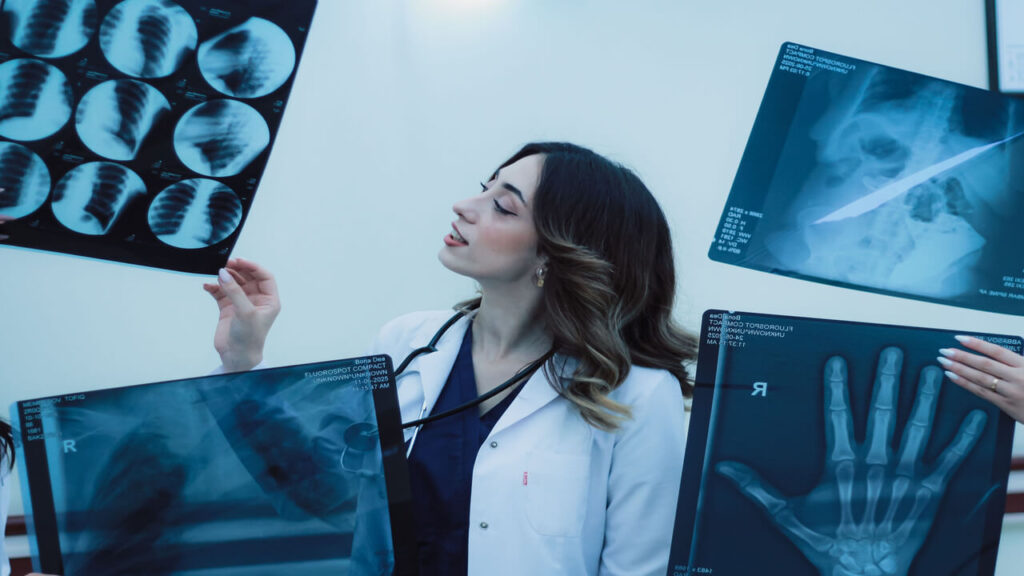
Are you fascinated by technology and passionate about helping people? If so, the Bachelor of Medical Imaging could be the perfect career choice for you. This degree opens doors to a dynamic and growing field in healthcare. It is a perfect choice for students who want to combine science, technology, and patient care.
Bachelor of Medical Imaging: An Overview
Have you ever wondered who takes those detailed X-rays or MRI scans at the hospital? That is the work of a medical imaging professional, also known as a radiographer. They are essential members of any healthcare team. They use advanced technology to create images of the human body. These images help doctors diagnose injuries, diseases, and other medical conditions.
The demand for these skilled professionals is growing rapidly. This is driven by an aging population and advances in medical technology. Therefore, a degree in this field offers excellent job security and a clear career path.
What is a Bachelor of Medical Imaging?
A Bachelor of Medical Imaging is an undergraduate degree that trains you to become a diagnostic radiographer. It is a specialized program that blends theoretical knowledge with extensive practical training.
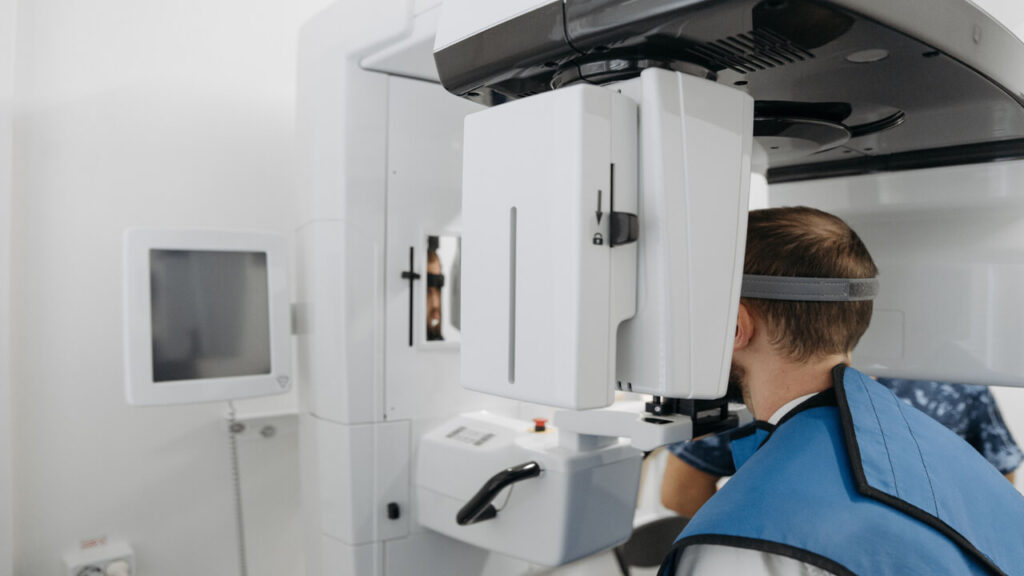
During the course, you will learn to use a variety of imaging equipment. This includes X-ray machines, Computed Tomography (CT) scanners, and Magnetic Resonance Imaging (MRI) machines. You will also study human anatomy, physiology, and pathology to understand what you are imaging. Most importantly, you will develop the communication and patient care skills needed to work with people who may be in pain or anxious.
Duration and Structure of the Program
The degree typically takes 3 to 4 years of full-time study to complete. The program is structured to give you a strong foundation in science before moving on to specialized clinical training.
The structure generally includes:
- Core Sciences: In the first year, you will study subjects like anatomy, physiology, and physics.
- Imaging Theory: You will learn the principles behind different imaging techniques and how to operate the equipment.
- Clinical Placement: A major part of the course is spent in hospitals and clinics. Here, you will work under the supervision of qualified radiographers. This hands-on experience is crucial for your development. For example, at Deakin University, clinical placements start in the very first semester.
Comparison Table: University Examples
Different universities offer this degree. Here is a comparison of a few to show the variety available.
| University | Location | Duration | Key Feature | First-Year Fee (Approx.) |
|---|---|---|---|---|
| Deakin University | Australia | 4 Years | Clinical placements from first semester | Contact university for details |
| Ara Institute of Canterbury | New Zealand | 3 Years | 100% of 2019 graduates employed | NZ$1,500 (additional texts) |
| MAHSA University | Malaysia | 4 Years | Comprehensive curriculum with multiple clinical placements | RM 60,000 – 110,000 (Total) |
Key Subjects and Skills You Will Learn
The curriculum is designed to be comprehensive. You will gain knowledge in a wide range of areas to prepare you for the clinical environment.
Core Subjects
- Anatomy and Physiology: You will study the structure and function of the human body in detail.
- Radiation Physics and Protection: This covers the science behind the imaging and, critically, how to protect patients and yourself from radiation.
- Imaging Techniques: You will learn how to perform procedures for general radiography, CT, MRI, and ultrasound.
- Pathology: Understanding diseases and injuries helps you understand what the images are showing.
- Patient Care: This focuses on communication, ethical practice, and managing patient needs.
Essential Skills Developed
- Technical Proficiency: You will become an expert in operating complex imaging equipment.
- Critical Thinking: You will analyze images and patient information to solve clinical challenges .
- Communication: You will learn to explain procedures to patients and work effectively within a healthcare team .
- Empathy and Compassion: You will care for patients who may be in stressful situations.
Career Opportunities and Salary Prospects
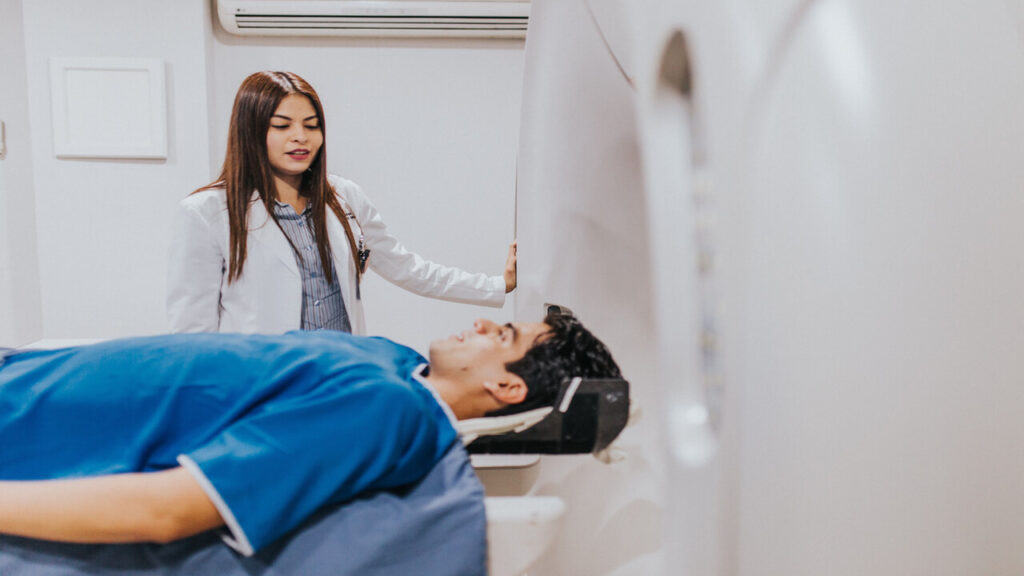
One of the best reasons to pursue this degree is the career outcome. Graduates are in high demand, and the field offers excellent salary prospects.
Job Roles
As a graduate, you will be eligible for roles such as:
- Radiographer (Diagnostic Radiographer)
- CT Technologist
- MRI Technologist
- Medical Imaging Technologist
Employment Rate and Salary
A recent study from New Zealand shows the degree is a direct path to employment. For graduates of the Bachelor of Medical Imaging, the employment rate two years after study was 97% .
Earning potential is also strong. In New Zealand, graduates can expect median earnings of $75,000 NZD** one year after study, rising to **$98,000 NZD after five years .
Work Settings
Radiographers work in a variety of settings. These include public and private hospitals, community health services, and private radiology clinics .
Pathways to Specialization
After gaining experience, many radiographers choose to specialize in a specific area. This can lead to more advanced roles and higher pay.
- Advanced Modalities: You can specialize in MRI, CT, or Ultrasound. These roles require extra training and are often in high demand .
- Interventional Radiology: This is a fast-growing subspecialty where imaging is used to guide minimally invasive surgical procedures .
- Oncology Imaging: This focuses on using imaging to diagnose and monitor cancer patients.
Where Can You Study Medical Imaging?
This degree is offered in many countries around the world. However, the entry requirements and fee structures can be very different. Below is a comparison of some top universities to help you make an informed decision.
Global Comparison Table: Top Universities for Medical Imaging (2026)
| University | Location | Annual Tuition Fee (approx.) | Key Admission Requirements | Program Duration |
|---|---|---|---|---|
| Monash University | Australia | A$60,900 (~₹40.87 Lakhs) | TOEFL 4.5, PTE 65; Strong Year 12 results | 4 Years |
| Deakin University | Australia | A$42,800 (~₹28.72 Lakhs) | TOEFL 94, PTE 65 | 4 Years |
| University of Canberra | Australia | A$41,000 (~₹27.52 Lakhs) | IELTS 6.0, PTE 50 | 3 Years |
| Ara Institute of Canterbury | New Zealand | NZ$26,572 per year | IELTS 6.5; First Aid Cert; NZ Police Vetting | 3 Years |
| Tung Wah College | Hong Kong | Varies (Contact institution) | HKDSE: English 3, Chinese 3, Math 2, + 1 Science | 4 Years |
How to Get Admitted: A Step-by-Step Guide
The admission process for a Bachelor of Medical Imaging can be competitive and specific. Most universities do not allow direct entry from high school. In fact, many require you to complete a foundation year or first-year science courses first. Here is a breakdown of the general steps you will need to follow.
1. The Academic Requirements: What You Need to Study
You will need a strong background in science. Most universities require high scores in subjects like Physics, Biology, and Chemistry or Mathematics.
- For Australia: You typically need a pass in Year 12 or its international equivalent, with prerequisites in Physics and Mathematics.
- For New Zealand (University of Auckland): This university does not offer direct entry from school. You must first complete the first year of a Bachelor of Science (BSc) or Health Sciences First Year program at another university. You are then ranked for admission based on 50% of your GPA and 50% from an interview (MMI).
- For Hong Kong: You need a minimum score in your HKDSE exams, including a science elective like Biology, Chemistry, or Physics.
- English Language: As an international student, you will almost certainly need to prove your English skills. An IELTS Academic score is commonly required. For example, QUT requires a 7.0 overall, while Ara Institute requires a 6.5 overall.
2. The Application Process: Beyond Just Grades
Getting admitted is not just about your grades. The application is often a multi-stage process.
- Step 1: Choose Your Entry Pathway. As mentioned, many programs require a “pre-entry” year. You must apply for this first. For example, if you want to study at the University of Auckland, you must apply for their BSc program first and then apply to transfer into Medical Imaging after your first year.
- Step 2: Submit Your Application. You will usually apply through a central application system (like QTAC in Australia or UCAS in the UK) or directly through the university’s website.
- Step 3: The Interview (MMI). This is a crucial step. Shortlisted candidates are often required to attend a Multiple Mini Interview (MMI). This is not a traditional interview. Instead, you will move through several short stations where you are evaluated on your communication skills, empathy, and problem-solving abilities, not just your academic knowledge.
- Step 4: Other Requirements. Be prepared to provide:
- Referee Reports: Usually two reports from people who know you well.
- Police Clearance / Vetting: As you will be working with patients, you must consent to a background check.
- First Aid Certificate: Many programs require you to have a valid first aid certificate before you start.
- Health and Immunization Records: You may need to show proof of immunity to certain diseases or a clearance for MRSA.
Question-Answer Session
1. What are the entry requirements for a Bachelor of Medical Imaging?
Entry requirements vary by university and country. Generally, you will need a strong background in science subjects (like physics, biology, and math) from high school. Many universities require a high score on standardized tests or a competitive ATAR (Australian Tertiary Admission Rank) . For international students, proof of English proficiency (like an IELTS score of 6.5) is usually required .
2. How much does the degree cost?
The cost varies widely depending on the institution and the country. For example, in Australia, fees for domestic students are subsidized by the government and can be around $11,750 per year for a Commonwealth Supported Place . In Malaysia, total fees can range from RM 60,000 to RM 110,000 . It is best to check directly with the specific university.
3. What is a clinical placement and why is it important?
A clinical placement is when you work in a hospital or clinic to gain real-world experience. It is an essential part of the course. You will practice your skills under the supervision of a qualified professional, working with real patients. This prepares you for the workplace and helps you build confidence .
Final Conclusion
The Bachelor of Medical Imaging is a fantastic choice for students seeking a stable, rewarding, and well-paid career in healthcare. It combines the thrill of advanced technology with the deep satisfaction of helping people. The demand for skilled radiographers is strong and growing globally . With high employment rates and clear paths for career progression, this degree offers a secure and exciting future. If you are ready for a career that makes a real difference, this could be your perfect path.
 Follow us on Google News for latest Scholarships!