

Have you ever thought about a career where you help people smile with confidence every single day? If so, learning how to become a dental hygienist might be the perfect path for you. This rewarding healthcare profession combines science, patient care, and hands-on work to improve people’s oral health and overall well-being.
How to Become a Dental Hygienist: An Overview
Imagine walking into a dental office, putting on your protective gear, and greeting your first patient of the day. As a dental hygienist, you are the friendly face that puts nervous patients at ease. Additionally, you play a vital role in preventing serious health problems by keeping people’s teeth and gums healthy.
This career offers great pay, flexible schedules, and growing demand. The U.S. Bureau of Labor Statistics projects that employment of dental hygienists will grow 7 percent from 2024 to 2034, which is much faster than the average for all occupations. In fact, about 15,300 new job openings are expected each year over the next decade. This guide will show you exactly how to enter this in-demand field.
What Does a Dental Hygienist Actually Do?
Dental hygienists are licensed professionals who work alongside dentists to provide preventive oral care. Furthermore, they educate patients on how to maintain good oral health. The role is far more advanced than a dental assistant, as hygienists have greater autonomy and responsibility.
Daily Responsibilities
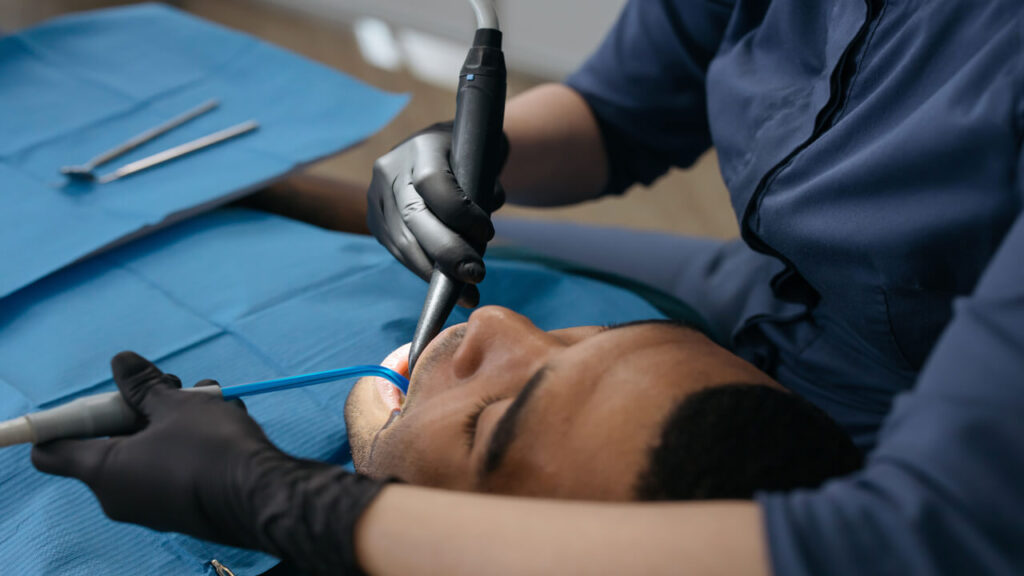
Your typical day as a dental hygienist would include:
- Cleaning teeth by removing plaque, tartar, and stains
- Taking and processing dental X-rays to help dentists diagnose problems
- Applying preventive treatments like fluoride and dental sealants
- Conducting oral health assessments to screen for signs of cavities, gingivitis, or even oral cancer
- Educating patients on proper brushing, flossing, and nutrition techniques
- Documenting patient care and updating treatment records
Work Environment
Nearly all dental hygienists work in dentists’ offices. Furthermore, many work part-time, which offers excellent flexibility for those with other commitments. Some hygienists also work in public health settings, hospitals, or community clinics.
How to Become a Dental Hygienist: 4-Step Roadmap
Becoming a dental hygienist requires formal education and licensure. However, the path is clear and manageable. Let us break it down step by step.
Step 1: Earn an Accredited Dental Hygiene Degree
Your first major step is to complete an accredited dental hygiene program. You have two main educational ways to choose from:
| Degree Path | Duration | Best For |
|---|---|---|
| Associate Degree | 2–3 years | The most common entry point into the profession; prepares you for clinical work and licensure. |
| Bachelor’s Degree | 4 years | Offers additional training in public health, research, education, or administration; increasingly preferred for career advancement. |
Your program must be accredited by the Commission on Dental Accreditation (CODA). This accreditation is essential because you will need to graduate from a CODA-approved program to become licensed.

What You Will Study
Dental hygiene programs combine classroom learning with hands-on clinical experience. You will typically take courses in:
- Biology with lab
- Microbiology
- Anatomy and Physiology I and II
- General Chemistry
- Nutrition
- Psychology and Sociology
- Medical Terminology
Step 2: Pass the National Board Dental Hygiene Examination (NBDHE)
After graduating, the next step is to pass the National Board Dental Hygiene Examination. This is a written test that assesses your knowledge of dental hygiene concepts and practices. Passing this exam is a nationwide requirement for licensure.
Step 3: Pass a State or Regional Clinical Board Exam
Most states also require you to pass a clinical board exam. This exam tests your practical skills by having you perform dental hygiene procedures on patients under observation. Common clinical exams include the ADEX/CITA exams.
Step 4: Apply for State Licensure and Maintain It
Once you have passed both exams, you must apply for a license in the state where you wish to practice. Additionally, many states require a jurisprudence exam to test your knowledge of state laws and regulations. To keep your license, you must complete continuing education courses regularly.
Dental Hygienist Salary: What Can You Expect?
The financial rewards of this career are excellent. According to the U.S. Bureau of Labor Statistics, the median annual wage for dental hygienists was $94,260 in May 2024, which is about $45.32 per hour.
Highest Paying States in the U.S. (2026)
Based on recent data from the Bureau of Labor Statistics, these are the top-paying states for dental hygienists:
| Rank | State | Average Annual Salary |
|---|---|---|
| 1 | Washington | $131,530 |
| 2 | California | $128,110 |
| 3 | District of Columbia | $127,910 |
| 4 | Alaska | $122,560 |
| 5 | Oregon | $120,470 |
| 6 | Nevada | $114,360 |
| 7 | Colorado | $110,030 |
| 8 | Maryland | $109,090 |
| 9 | Virginia | $105,120 |
| 10 | New Jersey | $104,410 |
Global Salary Snapshot
- India: The average salary for a dental hygienist is approximately ₹7,90,416 per year.
- Canada: Employment outlook varies by province, but demand remains steady.
- United Kingdom: Qualified hygienists are in demand, with salaries reflecting their specialized training.
Dental Hygienist vs. Dentist: What is the Difference?
This is a common question, and understanding the distinction is important for planning your career path.
| Feature | Dental Hygienist | Dentist |
|---|---|---|
| Primary Role | Preventive oral care and patient education | Diagnosing problems and performing surgical procedures |
| Typical Tasks | Cleanings, X-rays, fluoride treatments, sealants | Fillings, crowns, extractions, root canals, prescribing medication |
| Education Required | Associate or Bachelor’s degree (2–4 years) | Doctoral degree (8+ years including undergraduate) |
| Scope of Practice | Works under dentist’s supervision, focuses on prevention | Independently diagnoses and treats all dental conditions |
| Earning Potential | Median: $94,260/year | Significantly higher but requires more education |

Key Skills and Personal Qualities for Success
To thrive as a dental hygienist, you need more than technical knowledge. These soft skills are equally important:
- Excellent communication to explain procedures and educate patients.
- Strong attention to detail for detecting subtle signs of oral disease.
- Steady hands and good hand-eye coordination for precise clinical work.
- Compassion and patience to put anxious patients at ease.
- Critical thinking to assess patient needs and make appropriate decisions.
Question-Answer Session
1. How long does it take to become a dental hygienist?
It typically takes 2 to 3 years to complete an associate degree program in dental hygiene, which is the most common pathway. Some students opt for a 4-year bachelor’s degree for additional career opportunities.
2. Is an associate degree enough to become a dental hygienist?
Yes, an associate degree from an accredited program is the minimum qualification required for entry into the profession. However, a bachelor’s degree can open doors to roles in public health, education, administration, and research.
3. Can I work as a dental hygienist in any state?
You will need to meet each state’s specific licensing requirements. Most states require passing the National Board Dental Hygiene Examination and a clinical exam, but individual requirements may vary. Once licensed in one state, you can typically apply for endorsement in another, though additional steps may be needed.

Final Opinion
Becoming a dental hygienist is a smart career choice. The career is clear and achievable, requiring an accredited degree, passing national and clinical exams, and obtaining state licensure. In return, you will enjoy a stable career with strong job growth, excellent pay, and the deep satisfaction of helping patients maintain healthy smiles.
Sources:
- Winthrop University – Dental Hygienist Career Guide
- Becker’s Dental Review – 10 highest-paying states for dental hygienists in 2026
- Defence Health – What’s the difference between a dentist and dental hygienist?
- Santa Rosa Junior College – Dental Hygiene Program
- Bureau of Labor Statistics – Dental Hygienists Occupational Outlook Handbook
- Delta Dental of Arizona – Dental Hygienist Career Guide
- ADHA – 2026 State of Work Report
- Grin! Delta Dental – Dentists and dental hygienists: Do you know the difference?
- West Virginia University – School of Dentistry
- Becker’s Dental Review – The emerging hygiene rebound
- Wisconsin Department of Health Services – Oral Health Program
- Salary Expert – Dental Hygienist Salary in India
- Lewis-Clark State College – Dental Hygiene Program
- Job Bank Canada – Dental hygienists and dental therapists
- GOV.UK – Dental hygienist job profile
 Follow us on Google News for latest Scholarships!